Monday, 26 September 2022

T.P.C. Ralph Waldo Emerson, "Nature" (para 29 de novembro e 4 de outubro)


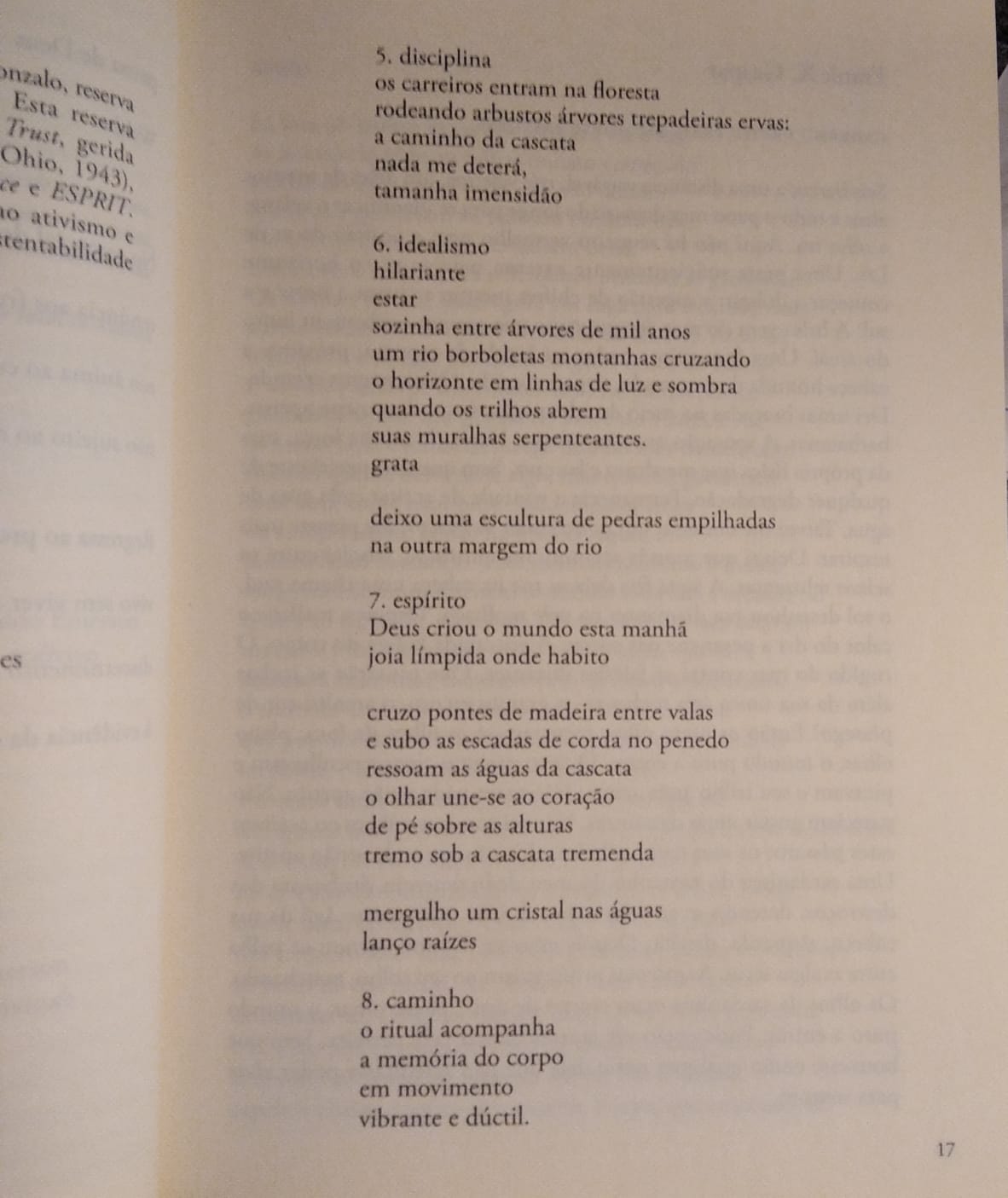
De que modo dialogam os dois poemas seguintes (de autores portugueses contemporâneos) com Nature de Emerson?  Poderá inspirar-se nalgum deles (ou em excertos do ensaio de Emerson) para entrar neste diálogo de forma criativa? Experimente.


Em alternativa, produza uma análise de texto do  último parágrafo da p. 1827, que se estende até à 1828. Desde "tTo  speak truly" até  "beautiful as his own nature". 

William Apess, "An Indian's Looking Glass" e a Estrutura do Sermão

 Apess, que foi ministro metodista laico, organiza o seu discurso de modo muito colado à estrutura clássica do sermão:


Exordium (primeiro parágrafo da p. 1868 até p. 1869, antes do primeiro parágrafo.) Introdução do tema e problemas, incluindo evocação a Deus. 

Expositio (com início no primeiro parágrafo da p. 1869 até p. 1870, antes do primeiro paragraph). Maior explicitação dos problemas e sua falta de solução - neste caso, Apess recorre sobretudo a perguntas retóricas, para expor o absurdo dos argumentos sobre a superioridade e desprezo em relação ao nativo, p. exemplo: “…it appears ten times worse in the sight of God and candid men, than skins of color—more disgraceful than all the skins that Jehovah ever made. If black or red skins, or any other skin of color is disgraceful to God, it appears that he has disgraced himself a great deal—for he has made fifteen coloured people to one white, and placed them here upon this earth.”(p.1869).
Confirmatio (início do primeiro parágrafo da 1870 até primeiro parágrafo da p. 1872). Fundamentação do anterior, com recurso a ilustrações bíblicas, por ex.: “The first thing we are to look at, are his precepts, of which we will mention a few. "Thou shalt love the Lord thy God with all thy heart, with all thy soul, with all thy mind, and with all thy strength." The second is like unto it. "Thou shalt love thy neighbor as thyself." On these two precepts hang all the law and the prophets…”(p.1870). 
Peroratio (desde segundo parágrafo, p. 1872 até ao último parágrafo na mesma página).  Lembram-se os pontos principais e influenciam-se as emoções da audiência, neste caso procurando incutir sentimentos de culpa, também porque as pessoas reconhecem que, ao contrário do que são chamadas, não são "noble-hearted" 

Sunday, 11 September 2022

BENVIND@S E TPC desafio: para 14 de setembro

Benvind@s à Literatura dos EUA - da época colonial a 1900.

Leiam, por favor, o poema de Marianne Moore "Virginia, Britannia" (1935) [há que fazer scroll para ler o poema, que é o terceiro; em alternativa, há uma versão em português], escolham 2-3 versos ou referências, pesquisem e comentem sobre relações com natureza, nativos e "outr@s" de um dos primeiros estabelecimentos ingleses na América do Norte (Jamestown) e subsequentes reivindicações de território e soberania. 

Eis um mapa de Virginia, de Captain John Smith's The Generall Historie of Virginia (1624), onde se pode ver, no canto em cima à esquerda, uma gravura do rei Powhatan.


Monday, 12 December 2016

Dec. 14 - “ ‘O, had I but followed the arts!’ Celebrating William Shakespeare (1616 - 2016)”


More info here.

Acceptable Examples of How to Cite Websites

Citing a general website article with an author

APA format structure:
Author, A.A.. (Year, Month Date of Publication). Article title. Retrieved from URL
APA format example:
Simmons, B. (2015, January 9). The tale of two Flaccos. Retrieved from http://grantland.com/the-triangle/the-tale-of-two-flaccos/

Citing a general website article without an author

APA format structure:
Article title. (Year, Month Date of Publication). Retrieved from URL
APA format example:
Teen posed as doctor at West Palm Beach hospital: police. (2015, January 16). Retrieved from http://www.nbcmiami.com/news/local/Teen-Posed-as-Doctor-at-West-Palm-Beach-Hospital-Police-288810831.html

Sunday, 11 December 2016

Creative Writing by Beatriz Santos: The Black Pearl

In my first year as a young writer I would often find myself lost. I had no identity. I had no ideas. I had nothing. The door to my creative world had been closed shut. Every writer has a door to their creative world and it is their mission to find the password to open it. Mine? Mine is three words of the most important meaning in the American Literature: Edgar Allan Poe. Thinking of Poe makes words flow through my body an out of my pen and a poem, that can be such a hard task to start, flows right out of me.
For as long as I remembered
Since when she was a sprout
The door was always open
People getting in and out

Hagar, Harriet and Prim
Would walk out and in
Danoe, Abel and Bout
Would walk in and out

With water cans in their hands
With baskets on their shoulders
With a child strapped onto a chest
At least until someone sold her

Poor little Hafiza was small
But she was already working
Little did she know
The horror her future was holding

Skin dark as a Raven
Haunted by sadness and loss
Her poor body had no haven
Soon she would be sold at a high cost


Mr. Bleu was the name
Skin white as Ivory
An idle old man
His profession was slavery

With her small bare fingers
She was bought to clean pearls
But soon her Lord’s hands
Were all over her curls

As the years passed by
Se mourned her fate
Mr. Bleu’s Black Pearl
Had been definitely worth the wait

To her eyes she was doleful
To her eyes she was doomed
To his eyes she was beautiful
To his eyes she had bloomed

For as the Black Cat
As the Black Raven
The Black Pearl
With bad luck, gave in

One day at dawn
The Black Pearl arose
With only one swing
Everything came to a close

People tell it differently
I don’t know what’s true
But I know that Hafiza
Killed the old white Mr. Bleu

With a knife or a pan
With what she had at hand
When she killed Mr. Bleu
It was also her end

And the old man’s soul
Lying on the cold stone floor
Shall be lifted
Nevermore

The little girl’s hands
That once cleaned pearls
Had now killed a man
That dared to touch her curls

Now she lies on the floor
As white as her soul
She has freed herself
Her body is now whole!


My poem/ story is mostly based on Walt Whitman and his idea of growth and death and how death is not an end but a new beginning, that’s why the character Hafiza killed herself. I also tried to portray the beauty accentuated by sadness that is a topic in the poem “The Raven” by Edgar Allan Poe. To the character’s eyes she was becoming sadder and doleful but for Mr. Bleu she was more beautiful than ever. I also took inspiration in “The Black Cat” by E. A. Poe because I like his inclination for topics like death and violence. Throughout, I also tried to incorporate references as “the black cat”, “the raven” and the final stanza on “The Raven” when describing the death of Mr. Bleu.

Creative Writing by Daniela Coelho: Whitman / The Stars

My username: Whitman
My password: the_stars

Studying the river
And its flow
I thought about how I’d like to reverse life
And make the night slow.

I then stared at the stars, oh they are art!
They seemed so sparkly,
They could calm my heart…
Perhaps even stop wars!

Under this dark sky
With the woods surrounding me,
I drifted to sleep easily.
With a sigh I flew high.

High above the sky,
I found myself among those stars,
They looked so similar to me.
Oh Emerson! Oh Whitman!
How could I have been afraid to die?

I then woke up everywhere*
With the image of the moon in my head.
Its shape resembled
The realization I had had.


* I decided to change “somewhere else” to “everywhere”, due to the idea of decomposition and growth I get from Whitman’s poetry. The speaker dies, his body is decomposed and then grows everywhere or is diffused, like grass that covers graves.